Manned Inspections
Direct confined-space physical surveys of ballast and void compartments.
Direct confined-space physical surveys of ballast and void compartments.
Confined Space Manned Inspection & Tank Surveys
Double-bottom ballast tanks, fuel cargo holds, void spaces, and structural thickness gauging.
Critical vessel tanks and industrial process vessels require certified personnel to physically enter and examine structural bulkheads where remote tools cannot reach.
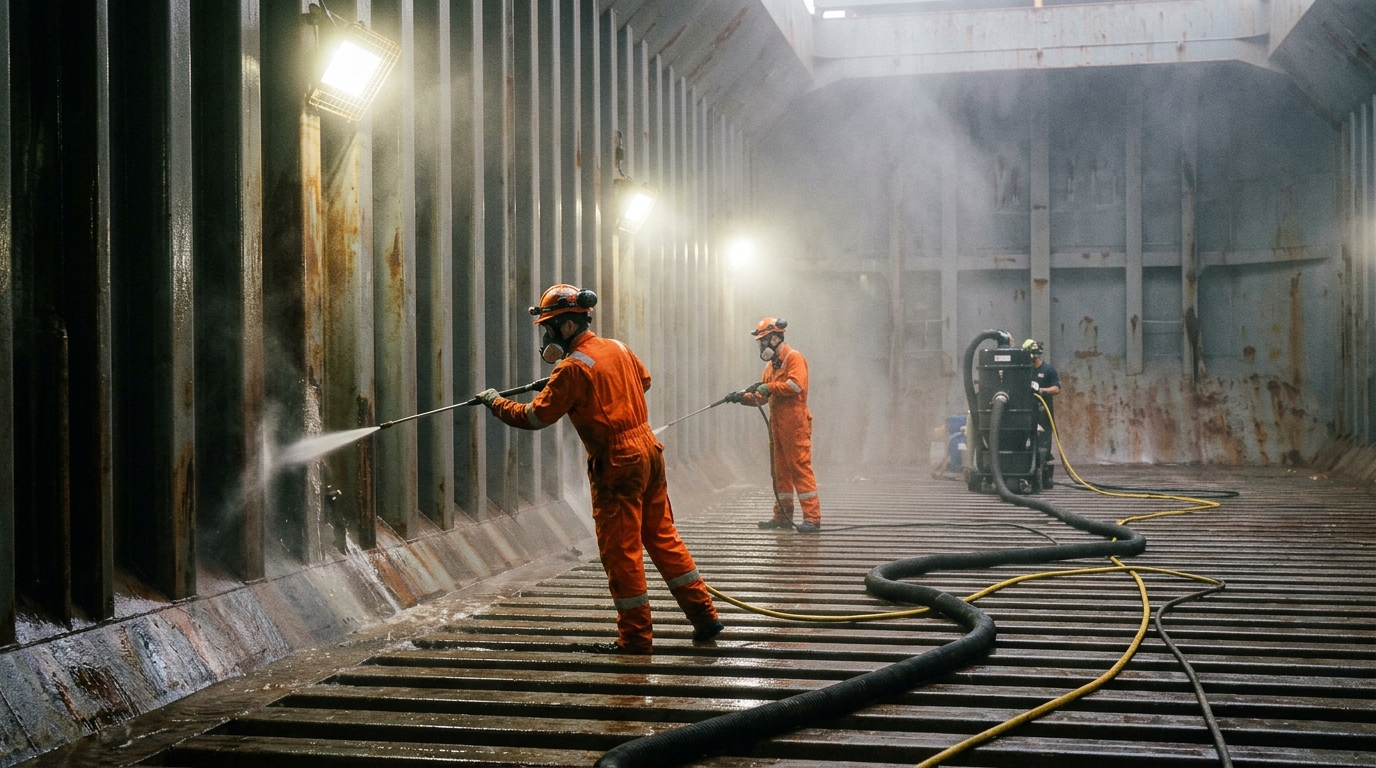
Chow Marine deploys highly trained, certified confined-space entry specialists equipped with supplied-air breathing apparatus, 4-gas telemetry, explosion-proof illumination, and digital ultrasonic thickness gauges.
Our inspectors systematically examine double-bottom fuel tanks, segregated ballast compartments, forepeak voids, and industrial clarifier vaults. We identify micro-fractures, localized pitting, coating breakdown, and structural fatigue before catastrophic failure occurs.
All inspections include comprehensive photographic documentation, CAD-mapped plate thickness plots, and formal condition assessment reports formatted for direct submission to flag-state maritime authorities and insurance underwriters.
Atmospheric Gas-Free Certification
Continuous testing for O₂, LEL, CO, and H₂S. Issuance of marine chemist gas-free hot/cold work permit.
Emergency Rescue Rigging
Setup of tripod rescue davits, mechanical winches, continuous mechanical ventilation blowers, and dedicated hole-watch.
Structural Condition Mapping
Inspection of frames, stiffeners, welds, and plate thickness measurements according to class survey grids.
Digital Survey Manifest
Compilation of plate wastage percentages, photo logs, and immediate engineering deficiency notifications.
| Gas Monitoring | PID & 4-Gas Telemetry 100% |
| Breathing Support | Supplied Air Airline + 10-Min Escape |
| Ventilation | 10,000 CFM Pneumatic Blowers |
| Lighting | ATEX Zone 0 Explosion-Proof LED |
| Survey Standard | IACS Special Survey Protocols |
Bulk Carrier 5-Year Special Survey Double-Bottom Ballast Inspection
Manned entry and inspection of 12 double-bottom ballast tanks and 4 wing tanks over a 48-hour scheduled port turnaround.
01
What safety gear do inspectors wear inside fuel or ballast tanks?
add
What safety gear do inspectors wear inside fuel or ballast tanks?
Inspectors wear chemical-resistant coveralls, continuous multi-gas monitors with audible and vibrating alarms, intrinsically safe headlamps, full-body harnesses, and carry escape breathing apparatus.
02
Who remains stationed outside the confined space?
add
Who remains stationed outside the confined space?
A certified Entry Attendant / Hole-Watch is permanently stationed at the manhole hatch, maintaining two-way radio contact and logging every technician entering and exiting the space.
03
Can you perform thickness gauging inside unwashed tanks?
add
Can you perform thickness gauging inside unwashed tanks?
While pre-cleaning significantly improves accuracy, our technicians carry portable high-pressure spot cleaning tools to expose clean steel for reliable ultrasonic transducer coupling.
Ready To Mobilize Crew & Tooling?
Connect directly with our Hamilton operations superintendent for emergency rapid mobilization, site evaluation, and firm engineering proposals.